Partial Truck Wrap Design for a Toyota Tacoma | Atlanta Vehicle Branding
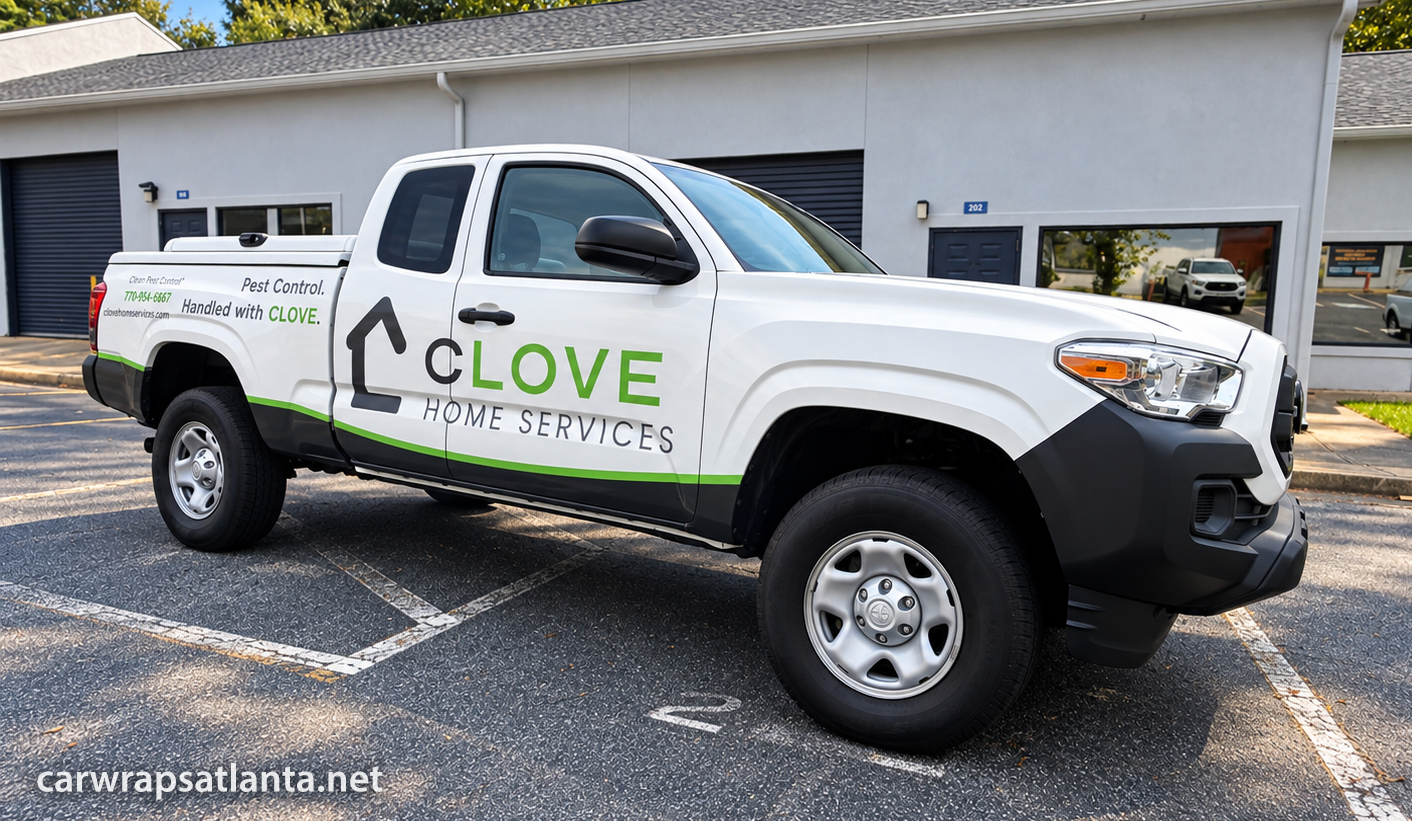
Side-angle view of a Toyota Tacoma partial commercial wrap showing how factory paint, large door branding, lower-body graphics, and color accents can work together as one cohesive vehicle branding system.
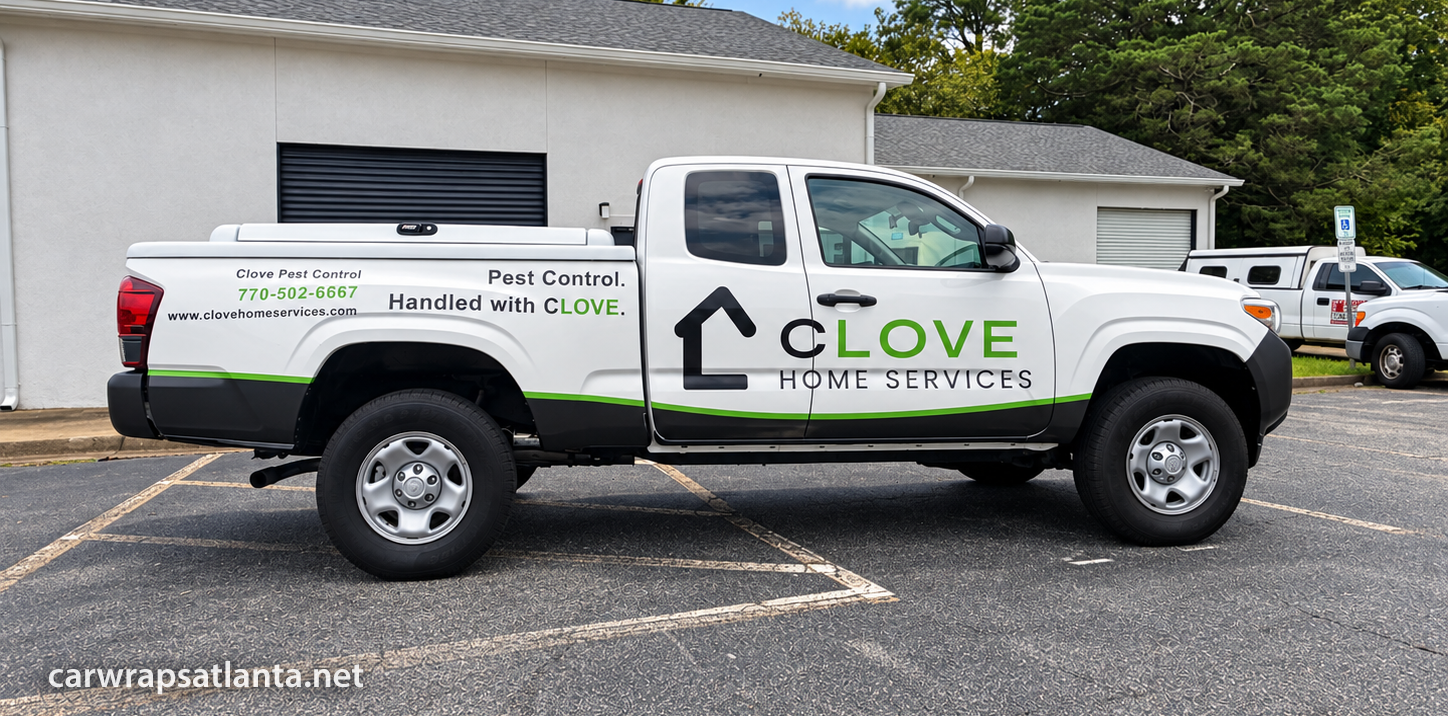
Side-profile view showing how a partial wrap can create a complete fleet-ready appearance without covering the entire vehicle.
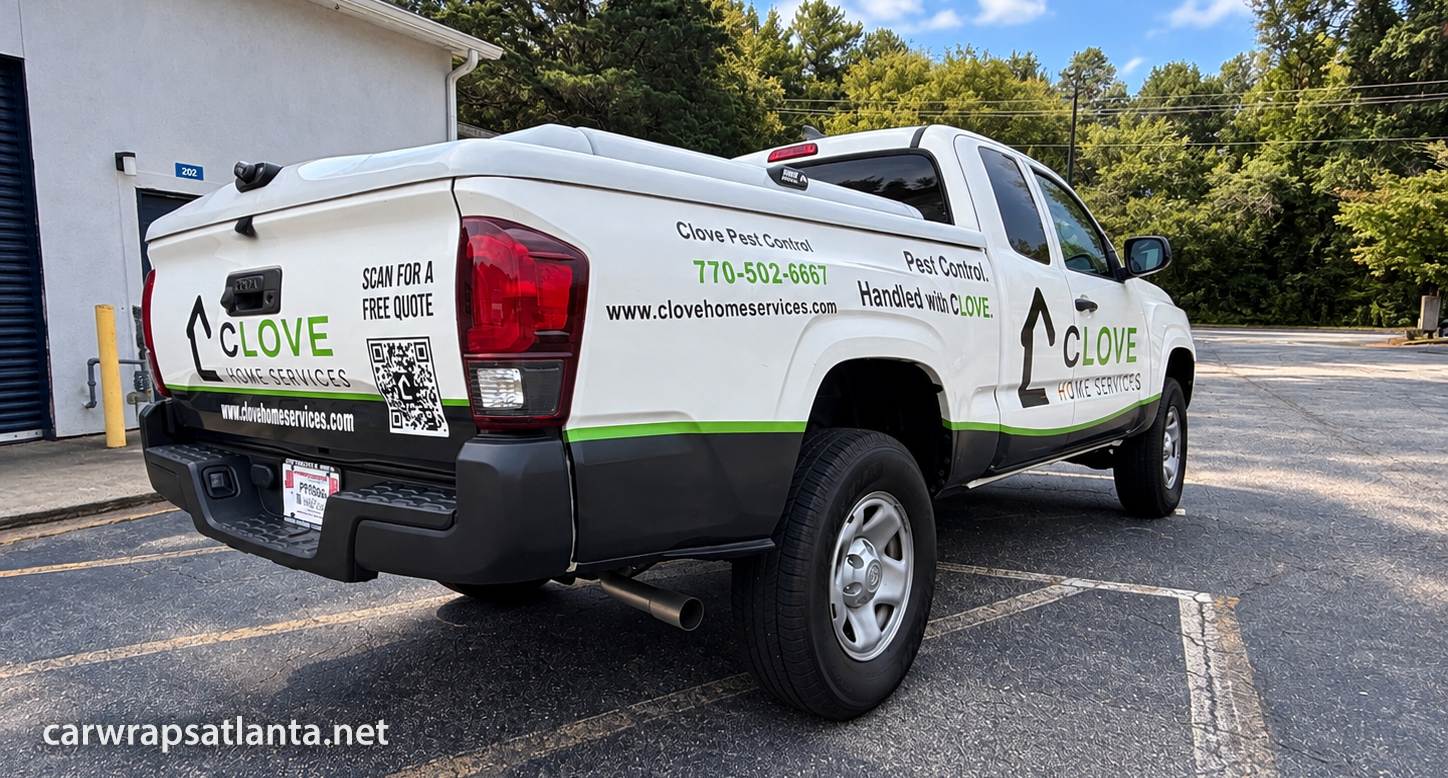
Rear vehicle graphics designed for longer viewing time, including contact information, company branding and a QR-code call to action.
A successful partial vehicle wrap should never feel like a collection of decals added wherever space was available.
The best partial wraps are designed around the vehicle itself — using the factory paint, body lines, wheel openings, doors, bed, bumpers, and viewing angles as part of the composition.
This Toyota Tacoma project for Clove Home Services is a good example of how a clean commercial design can create strong brand visibility without covering the entire truck.
The result is a practical service vehicle that feels intentional, professional, and immediately recognizable.
Designing Around the Factory Paint
One of the biggest advantages of a partial wrap is the ability to use the original vehicle color as part of the design.
On this white Toyota Tacoma, the factory paint became the primary background rather than something that needed to be covered.
That allowed the black lower section and bright green accent line to create contrast while keeping the overall design clean.
Instead of forcing graphics across every available panel, the design uses the existing white body as negative space.
This gives the truck a lighter visual appearance while still creating enough contrast for the branding to stand out from a distance.
Creating a Strong Visual Anchor
The large Clove Home Services logo is positioned prominently across the doors, where it becomes the primary visual element from the side.
That is important.
A commercial truck needs one clear focal point.
If the logo, phone number, website, service list, and promotional message are all competing at the same visual level, the vehicle becomes difficult to read.
Here, the company identity takes priority.
The black lower section then acts as a visual anchor, helping connect the front and rear portions of the truck while giving the design more weight near the bottom of the vehicle.
The green line adds movement and reinforces the company color without overwhelming the layout.
Designing for Real-World Viewing
Vehicle graphics are not viewed like a brochure or website.
Most people will see the truck:
while driving past it
from another lane
while stopped at a light
parked in a neighborhood
from behind in traffic
from across a parking lot
That means the design has to communicate quickly.
The side of this Tacoma focuses on the logo, company identity, pest control service, phone number, and website.
The rear carries additional information, including a QR code and call to action, because viewers behind the vehicle often have more time to process the message.
This difference between side-view and rear-view communication is an important part of commercial vehicle wrap design.
Using a QR Code Without Creating Clutter
QR codes can be useful on service vehicles, but they need to be placed carefully.
On this Tacoma, the QR code is positioned on the rear of the truck with the message:
Scan for a Free Quote
This gives the code a clear purpose.
Instead of placing the QR code prominently on the side, where drivers may only see the vehicle for a few seconds, the rear provides a more practical location for interaction.
It also allows the sides of the truck to remain cleaner and more brand-focused.
Partial Wraps Can Still Feel Complete
A partial wrap should not look unfinished simply because some of the original paint remains visible.
The objective is to create a composition where the wrapped and unwrapped areas feel intentional.
On this Toyota Tacoma, the white body, black lower graphics, and green accent line work together as one visual system.
That makes the truck feel branded from front to rear even though the entire vehicle is not covered in vinyl.
This approach can be especially effective for:
pickup trucks
service vans
SUVs
fleet vehicles
utility vehicles
home-service companies
contractors
pest control companies
HVAC, plumbing, electrical, and landscaping businesses
Designing for Future Fleet Growth
A good commercial vehicle design should also be adaptable.
If a company later adds another Tacoma, van, trailer, or larger fleet vehicle, the branding system should be able to carry across different vehicle shapes without losing its identity.
Elements such as logo hierarchy, black lower graphics, accent colors, typography, and information structure can be adapted across an entire fleet.
That consistency helps businesses build stronger recognition over time.
For growing service companies, this is one of the biggest advantages of developing a vehicle branding system instead of designing each vehicle independently.
Graphic Design First, Vehicle Wrap Second
Commercial vehicle graphics are most effective when the design process starts with communication rather than vinyl coverage.
The questions are not simply:
“How much of the truck should be wrapped?”
They are:
What should someone notice first?
What information needs to be readable from a distance?
How can the factory paint become part of the design?
Which elements should repeat across the fleet?
What should be placed on the sides versus the rear?
How can the vehicle look professional without becoming visually crowded?
When those decisions are made first, the wrap becomes a much stronger branding tool.
Vehicle Wrap Design for Atlanta Businesses
Atlanta Design Wraps by S2DM develops commercial vehicle graphics with a design-first approach.
From partial pickup truck wraps and van graphics to fleet systems, trailer graphics, box trucks, and full commercial wraps, each project is developed around the vehicle, brand, and real-world viewing conditions.
A well-designed work vehicle should do more than display a logo.
It should become part of the company’s visual identity wherever the business goes.
Planning a commercial vehicle wrap or fleet graphics project?
S2DM can help develop a vehicle branding system designed for real-world visibility, consistency, and long-term use across your fleet.